

.svg)
.svg)


When Your Home Feels Like an Oven: Understanding AC Cooling Problems
An AC not cooling is a frustrating problem for San Diego homeowners, especially during sweltering summer days. Coming home to a house that feels like an oven when your AC is running but not providing cool comfort is a common issue that needs a solution.
Quick Diagnosis for AC Not Cooling:
- Check thermostat settings - Ensure it's on "Cool" mode with the fan set to "Auto."
- Inspect air filter - Replace if dirty or clogged, as this restricts airflow.
- Clear outdoor unit - Remove debris from around the condenser coils.
- Look for ice buildup - Turn off the AC if you see ice on the evaporator coils.
- Check vents - Ensure all registers are open and unblocked.
- Listen for unusual sounds - Hissing may indicate a refrigerant leak.
Since most US homes have air conditioning, AC problems are a widespread concern. While some cooling issues have simple DIY solutions, others require professional diagnosis and repair to safely restore your home's comfort.
This guide covers the most common reasons your AC isn't cooling, helping you identify quick fixes and know when to call West Coast Heating Air Solar & Plumbing for expert help.
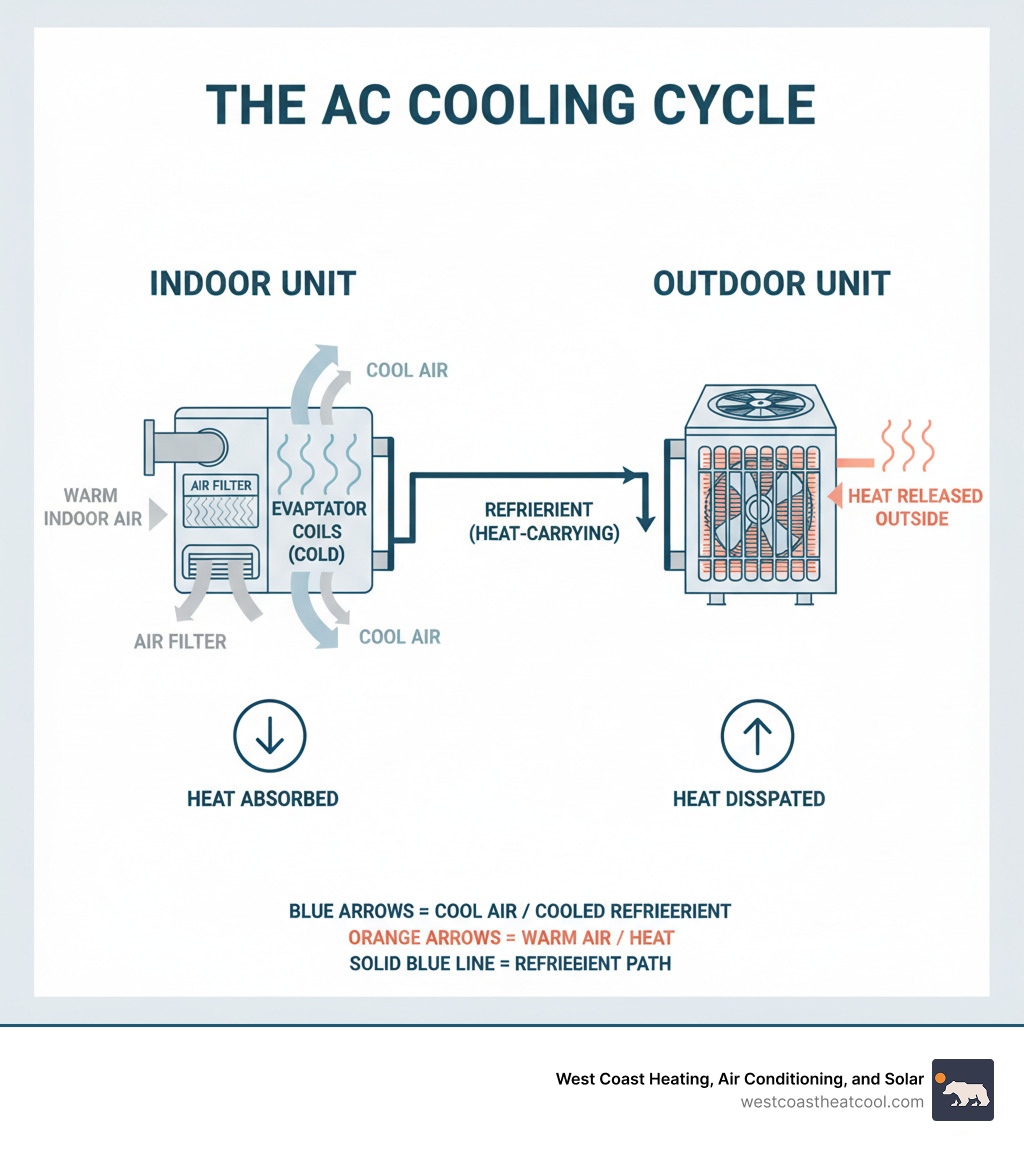
Simple guide to AC not cooling terms:
DIY Troubleshooting: Your First Steps When the AC Isn't Cooling
When your AC not cooling becomes a problem, several simple checks can often solve the issue without a service call. These DIY steps tackle the most common culprits, and you might be surprised how often the fix is simple.
Check Your Thermostat: The Brain of the Operation
Your thermostat controls your AC system, and incorrect settings are a frequent cause of cooling problems. Before assuming a major failure, run through this quick checkpoint routine.
First, make sure the thermostat is set to "Cool" mode, not "Heat" or "Fan Only." Next, set the fan to "Auto" rather than "On." The "Auto" setting ensures the fan only runs when the AC is actively cooling, while the "On" setting can circulate unconditioned air, making your home feel warmer. Finally, verify your temperature setting is lower than the current room temperature.
For battery-powered models, dead batteries can disable your system, so a quick swap might be all you need. If you have a smart thermostat that's unresponsive, try resetting it by turning its power off at the circuit breaker for a few minutes, then turning it back on. An Energy Star smart thermostat can also reduce heating and cooling bills by about 8%.
Inspect the Air Filter: The Lungs of Your System
Your air filter is essential for proper airflow. A clogged filter is the most common—and easiest to fix—reason for an AC not cooling.
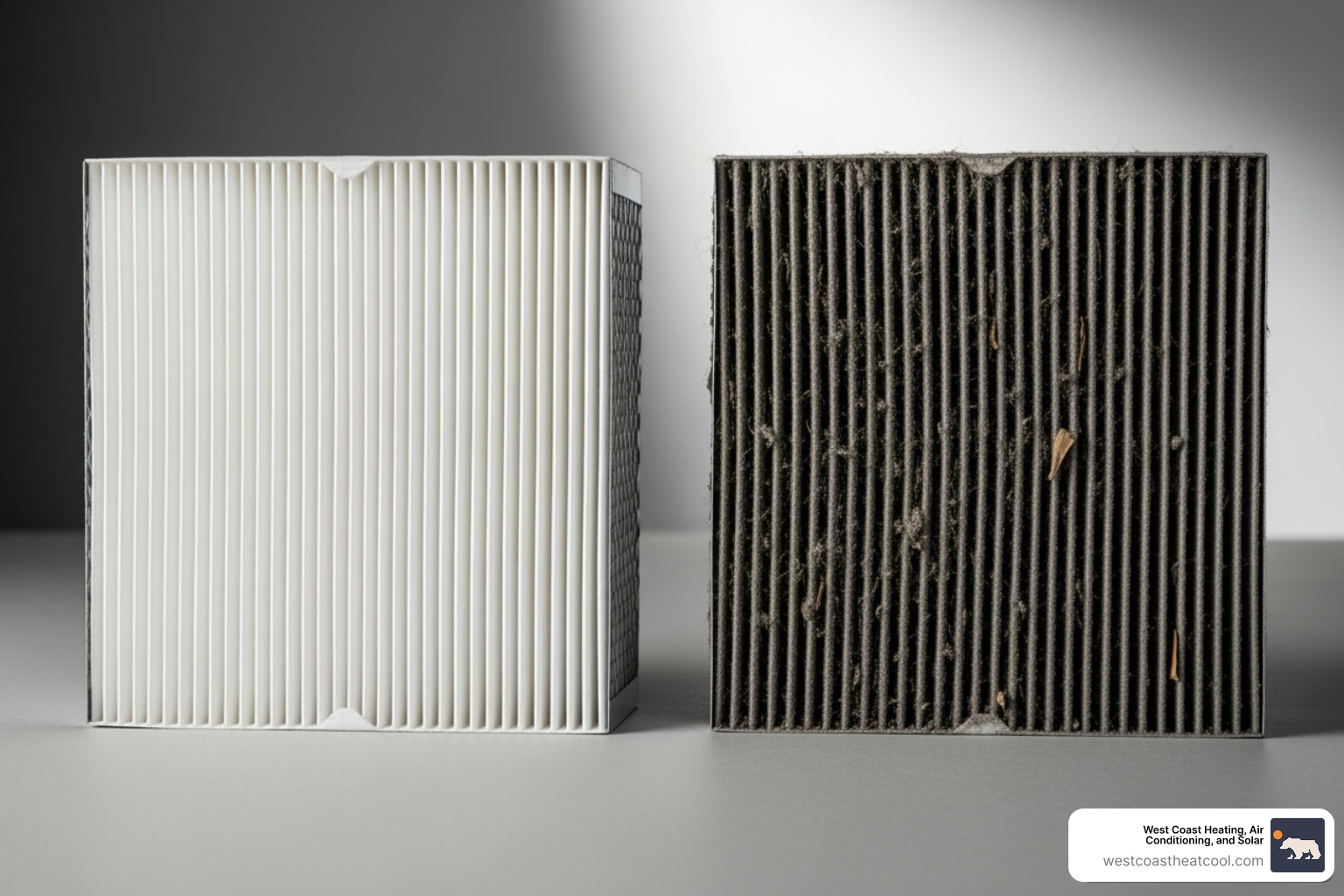
A dirty filter restricts airflow, forcing your system to work harder and reducing its cooling ability. This leads to weak airflow from your vents and longer run times. To check your filter, hold it up to a light; if you can't see light through it, it's time for a replacement. We recommend checking your filter monthly and replacing it every 1-3 months.
Ignoring a dirty filter can cause frozen evaporator coils. When airflow is too low, the coils get so cold that moisture freezes on them, blocking airflow even more and preventing your home from cooling down.
When choosing a replacement, stick to your system's recommended MERV rating to balance air filtration and proper airflow.
Clear Vents and the Outdoor Unit
Your AC needs clear pathways to move air effectively. Blockages inside or outside your home can stop your AC not cooling efficiently.
Inside, check that air vents and supply registers aren't blocked by furniture, curtains, or other items. It's also best to keep vents open in all rooms, as closing them can increase pressure in your ductwork and reduce overall efficiency.
Outside, your outdoor condenser unit needs at least two feet of clearance on all sides to release heat. Clear away any debris like leaves, grass clippings, or overgrown bushes. To clean the unit, first turn off its power at the circuit breaker. Then, gently spray the exterior fins with a garden hose on a low-pressure setting to avoid bending the delicate fins.
Deeper Diagnosis: Common Culprits Behind an AC Not Cooling
If basic troubleshooting doesn't solve your AC not cooling problem, it's time to look at mechanical issues that often require a professional.
The Frozen Evaporator Coil: An Icy Warning Sign
Ice on your indoor AC unit is a red flag that something is wrong. A frozen evaporator coil is a key reason your AC not cooling effectively.
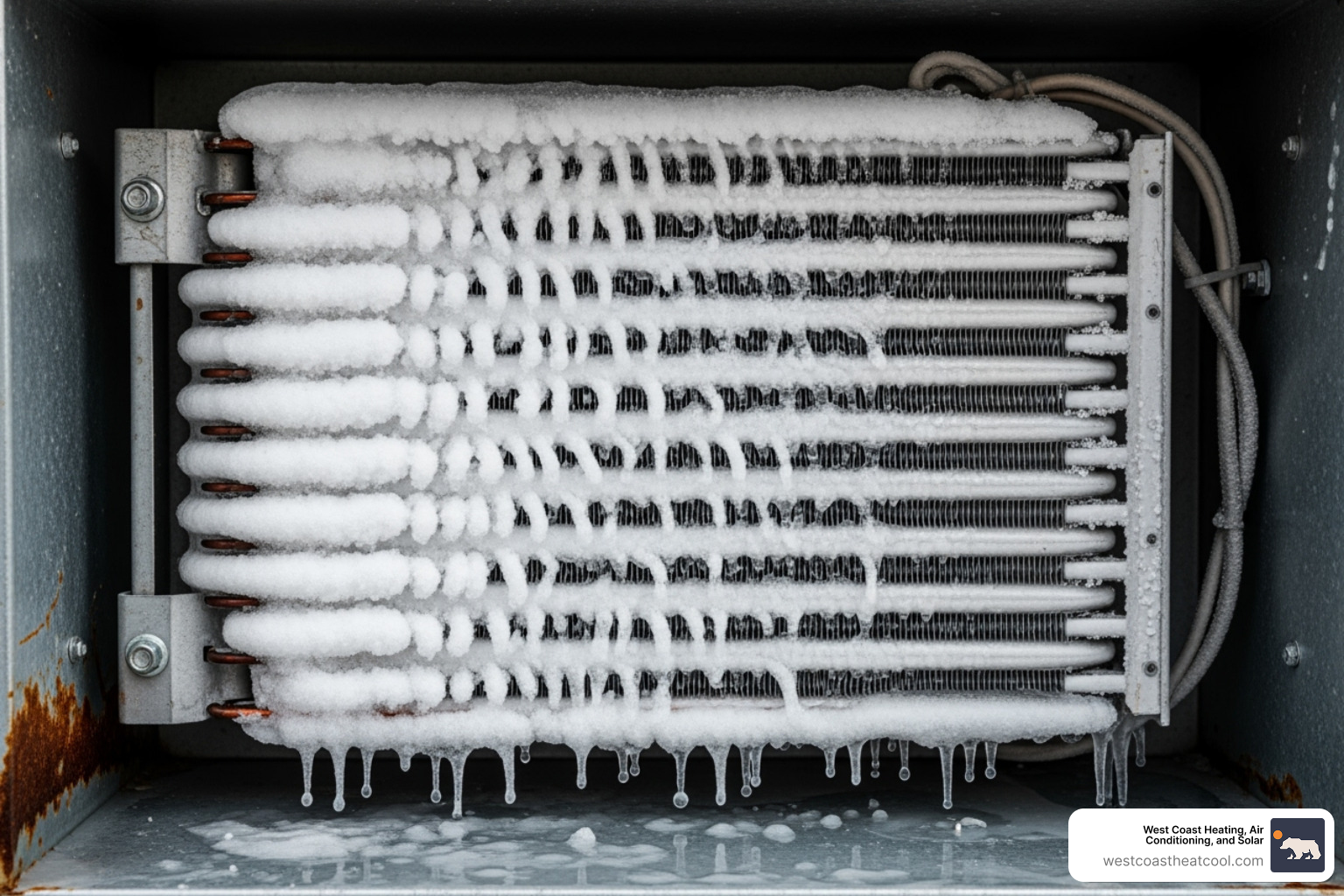
Signs of freezing include visible ice on the coil or copper lines, water leaks from the melting ice overflowing the drain pan, and weak, warm airflow from your vents. The ice acts as a barrier, blocking air from being cooled.
The two main causes are poor airflow (usually from a dirty filter or blocked vent) and low refrigerant. When refrigerant leaks, the pressure drop inside the coil causes it to become excessively cold and freeze.
If you find a frozen coil, safely thaw the unit by turning off the AC at the thermostat to prevent compressor damage. Then, switch the fan to "On" to circulate air over the ice and speed up melting, which can take several hours. After it thaws, address the root cause, like changing the filter or calling a professional to check for a refrigerant leak.
Leaky Air Ducts: Where Is Your Cool Air Going?
Leaky air ducts can steal cool air before it reaches your rooms, making your AC not cooling as it should. These leaks are often hidden in attics, crawl spaces, or walls.
When conditioned air escapes, it leads to reduced efficiency, uneven cooling in your home, and high utility bills as your system works harder to compensate. Signs of leaks include excessive dust, visible tears in exposed ductwork, or whistling sounds from your vents.
While DIY tape might seem like a quick fix, professional duct sealing is the best solution. Technicians can inspect your entire system, locate all leaks, and seal them with specialized materials to ensure cool air gets where it's needed.
When to Call the Pros: Complex Repairs and Safety Concerns
Some AC not cooling problems require the expertise of a licensed HVAC professional. Complex mechanical failures or issues involving electrical components and refrigerant should always be handled by a trained technician to ensure safety and prevent further damage.
The Refrigerant Riddle: A Common Reason for an AC not cooling
Refrigerant is a chemical that absorbs heat from your home. If the level is low, your AC not cooling is inevitable because it can't transfer heat effectively.
Low refrigerant symptoms include lukewarm air from vents, a hissing or bubbling sound from the unit, or an oily residue on the refrigerant lines. It's important to know that refrigerant is not "used up"; it circulates in a closed loop. Low levels always mean there is a leak.
A technician who simply "tops off" refrigerant without fixing the leak is providing a temporary fix at best. Professional leak detection and repair are necessary. Our certified technicians use specialized tools to find the leak, repair it, and recharge the system to the manufacturer's specifications.
Handling refrigerant also involves environmental and safety risks. Modern refrigerants contain toxic and flammable chemicals and require EPA certification to handle safely. While refrigerant poisoning is rare, improper handling poses health risks and harms the environment.
Compressor and Fan Motor Failure
The compressor and condenser fan motor are critical components. If either fails, your AC not cooling becomes a complete system breakdown.
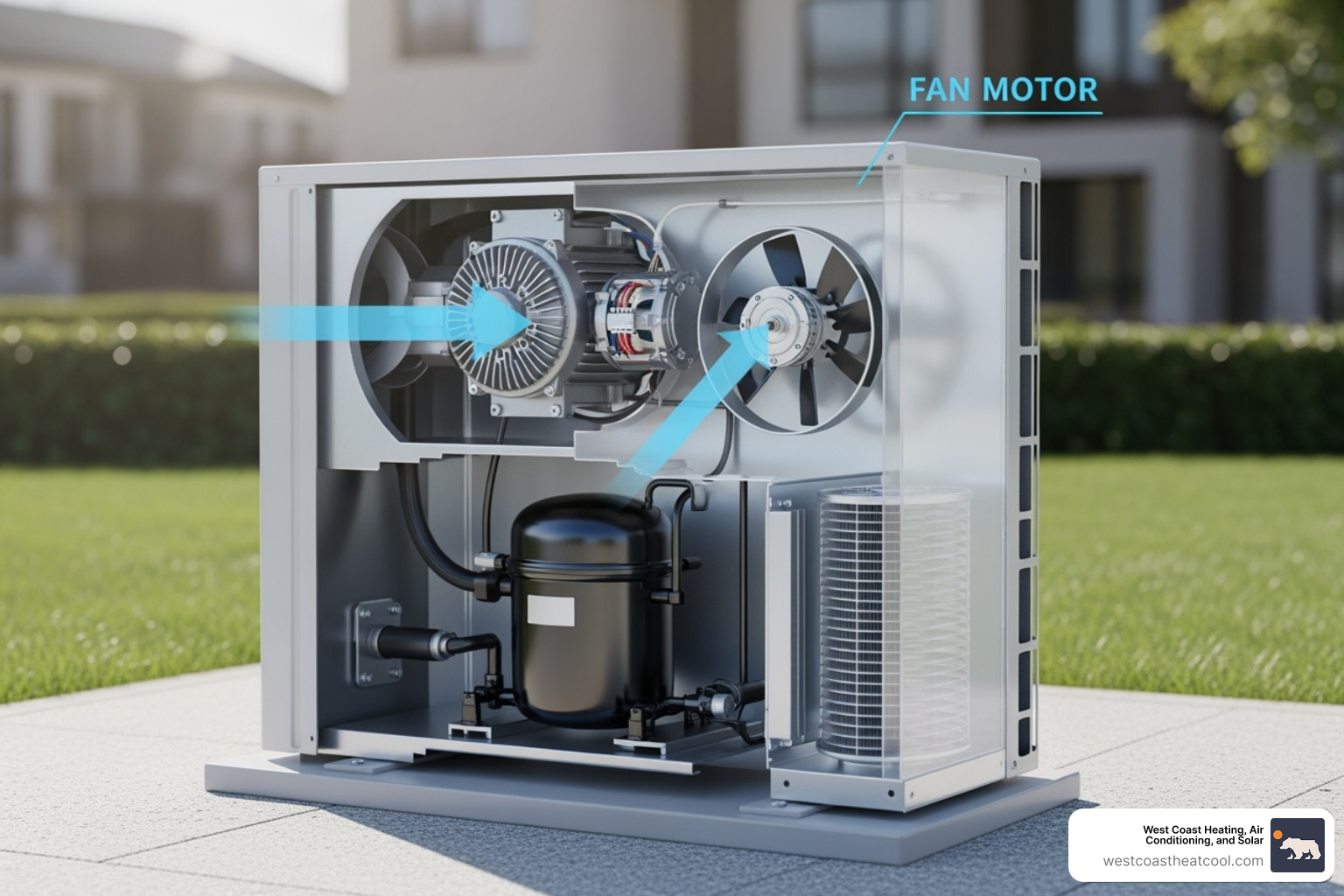
The compressor is the "heart of the system," circulating refrigerant. Signs of compressor failure include loud grinding or clattering noises, the system struggling to start, or a frequently tripping circuit breaker. Sometimes, the issue is a failed capacitor (the compressor's starter), which is a much less expensive repair than a full compressor replacement.
The condenser fan motor, located in the outdoor unit, blows air over the coils to release heat. If it fails, the compressor can overheat and shut down. Signs of fan motor failure include the outdoor fan not spinning while the unit is on or making squealing noises.
Diagnosing and repairing these components requires professional tools and expertise. Our technicians can accurately identify the problem and perform the correct repair.
The Big Decision: Repairing vs. Replacing Your AC Unit
When faced with a major repair for an AC not cooling, homeowners must decide whether to fix the old system or invest in a new one. There's no single right answer, but considering a few key factors can help you make the best choice for your home and budget.
Is Your AC Nearing the End of Its Lifespan?
Like any major appliance, an AC system has a limited lifespan. Recognizing when it's time to replace it can save you money and frustration in the long run.
Age is a critical factor. Most AC systems last about 10-15 years. If your unit is older, repair costs can quickly add up. Additionally, systems installed before 2010 often use R-22 refrigerant, which has been phased out. Recharging a leak in an R-22 system is now extremely expensive.
Frequent breakdowns and rising energy bills are other red flags. If you're constantly calling for repairs or your summer electricity costs keep climbing, your aging AC is likely losing efficiency. A modern, high-SEER (Seasonal Energy Efficiency Ratio) system can provide significant energy savings.
The Power of Prevention: Why Regular Maintenance Matters
Regular maintenance is the best way to avoid an AC not cooling emergency. Think of it as insurance for your comfort and your investment.
Professional tune-ups help prevent breakdowns by catching small issues before they become major problems. Regular care also extends the lifespan of your unit and improves its efficiency, leading to better cooling and lower energy bills.
During a tune-up, a technician will clean coils, check refrigerant levels, inspect electrical connections, calibrate the thermostat, lubricate moving parts, and ensure the condensate drain is clear. This comprehensive service keeps your system running at peak performance.
Regular maintenance maximizes your comfort and minimizes your costs. More info about our HVAC maintenance services.
Frequently Asked Questions About AC Cooling Problems
When your AC not cooling leaves you sweating, you likely have questions. Here are answers to the most common concerns we hear from San Diego homeowners.
Should I turn my AC off if it's not cooling?
Yes. Turning off a malfunctioning AC is a smart move that can prevent a small problem from becoming a major expense. Continuing to run the unit puts strain on the compressor, which is the most expensive part to replace. If you see ice on the indoor unit, turning the system off allows the frozen coils to thaw. It's also a safety precaution against potential electrical issues and stops you from wasting energy.
Why is my AC running but not blowing cold air?
This is a classic AC not cooling puzzle. If your system seems to be running but the air isn't cold, check for these common culprits:
- Dirty air filters: A clogged filter restricts airflow and can cause the system's coils to freeze.
- Incorrect thermostat settings: Ensure the thermostat is set to "Cool" and the temperature is set lower than the current room temperature.
- Low refrigerant: A leak in the system means it can't absorb heat from your home effectively.
- Dirty condenser coils: If the outdoor unit's coils are covered in dirt or debris, they can't release heat properly.
How do I reset my central AC unit?
A reset can sometimes resolve minor electrical glitches causing your AC not cooling issues. Follow these steps for a proper reset:
- Turn off the thermostat by setting it to the "Off" position.
- Turn off the circuit breaker for your AC system. Your electrical panel may have separate breakers for the indoor ("Air Handler") and outdoor ("Condenser") units; turn them both off.
- Wait 5 minutes. This crucial step allows the internal components to fully reset.
- Turn the power back on by flipping the breakers back to the "On" position.
- Turn the thermostat back to "Cool" and set the temperature a few degrees below the room temperature. Give the system 10-15 minutes to start its cooling cycle.
If the AC still doesn't cool after a reset, it's time to call a professional.
Get Your Cool Back in San Diego
We hope this guide has given you the confidence to tackle frustrating AC not cooling moments. A comfortable home is essential for enjoying life in San Diego County, from Oceanside to Chula Vista.
Many cooling problems have simple solutions you can handle yourself, such as checking thermostat settings, replacing a dirty air filter, or clearing debris from your outdoor unit. These quick fixes can often restore your cool air in minutes.
However, complex issues like refrigerant leaks, compressor failures, and persistent frozen coils require a professional touch. Attempting to fix these yourself can lead to more expensive damage and safety risks. That's where we come in.
Since 1996, West Coast Heating Air Solar & Plumbing has been San Diego's trusted partner for home comfort. Our customer-centric approach focuses on providing comprehensive solutions that address your immediate needs and long-term goals, whether that's a simple repair, a system upgrade, or a maintenance plan.
Don't spend another day uncomfortable in your own home. Life in San Diego is too good to be spent sweating indoors.
Contact our San Diego HVAC company for expert AC repair service today, and let's get your cool back where it belongs!
.svg)