

.svg)
.svg)


Understanding HVAC Replacement in San Diego
When you're looking into an HVAC replacement in San Diego, you're making a significant decision about your home's comfort and efficiency. Whether your old unit is struggling, you're facing frequent repairs, or you're ready for a more energy-conscious solution, understanding the scope of the project is key. San Diego's unique climate and local regulations add specific considerations, and knowing these elements helps you make a confident decision for your home.
Quick Answer: What Influences Your HVAC Replacement Project in San Diego
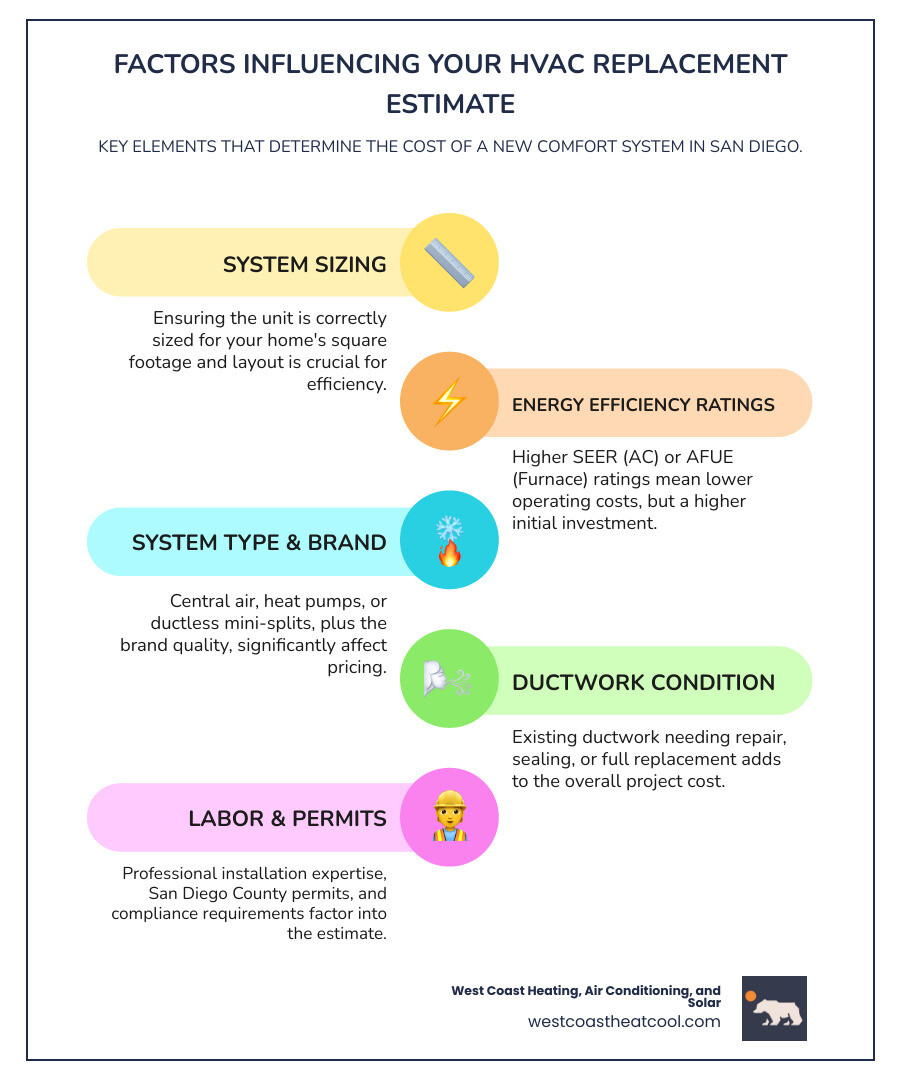
- System Size: Properly sized units based on your home's square footage and layout
- Energy Efficiency: Higher SEER ratings improve performance and reduce energy use
- System Type: Central air, heat pumps, or ductless mini-splits each have different project requirements
- Ductwork Condition: The state of your existing ducts can influence the project scope
- Labor & Permits: San Diego County requirements and professional installation
- Home Specifics: Insulation quality, ceiling height, and installation complexity
For comprehensive guidance on HVAC services, explore our heating and cooling solutions, or request a detailed replacement plan from our experienced team.
A well-planned project starts with understanding all the components. It's not just the equipment—it's the engineering, installation expertise, local compliance, and the long-term performance of your entire comfort system. Most replacement projects involve several moving parts, from load calculations to ductwork inspections. When you know what shapes your project, you can ask better questions and choose the system that truly fits your home.
Repair or Replace? Signs It's Time for a New HVAC System
Deciding whether to fix your current system one more time or choose a new one can be tough, but your HVAC system usually provides clear signals when it's ready to retire.
Age is a primary clue. Most air conditioning units last about 12 to 15 years, while furnaces typically last 15 to 20 years. Heat pumps generally fall in the 10 to 20-year range. If your system is approaching or has passed these milestones, it's wise to start considering replacement.
Frequent breakdowns are another tell-tale sign. When you're scheduling repair visits regularly, it indicates that the system's overall reliability is declining. One fix may only be a temporary solution before another issue arises.
Rising energy consumption often signals inefficiency. An older system may still function, but it often works much harder and consumes more energy to do its job, which can be reflected in your utility bills. Modern systems are designed for significantly better energy efficiency.
Pay attention to strange noises or odors. A gentle hum is normal, but grinding, squealing, or rattling sounds mean something is wrong internally. Likewise, persistent musty or burning smells can indicate problems that could affect your indoor air quality.
Uneven temperatures throughout your home are another red flag. If some rooms are always too hot while others are too cold, your system isn't distributing air effectively anymore. This could mean the unit is losing capacity or has other underlying issues.
When repairs become frequent and substantial, replacement often becomes the more practical long-term solution for reliability and comfort. Regular maintenance is key to extending your system's lifespan. For more insights on preventive care, check out our HVAC maintenance services.
Key Factors That Shape Your HVAC Replacement Project in San Diego CA
Understanding what goes into an HVAC replacement project is crucial for making an informed decision. It's a combination of precision engineering, your home's unique characteristics, and local expertise. Several key factors work together to define the scope of your project.
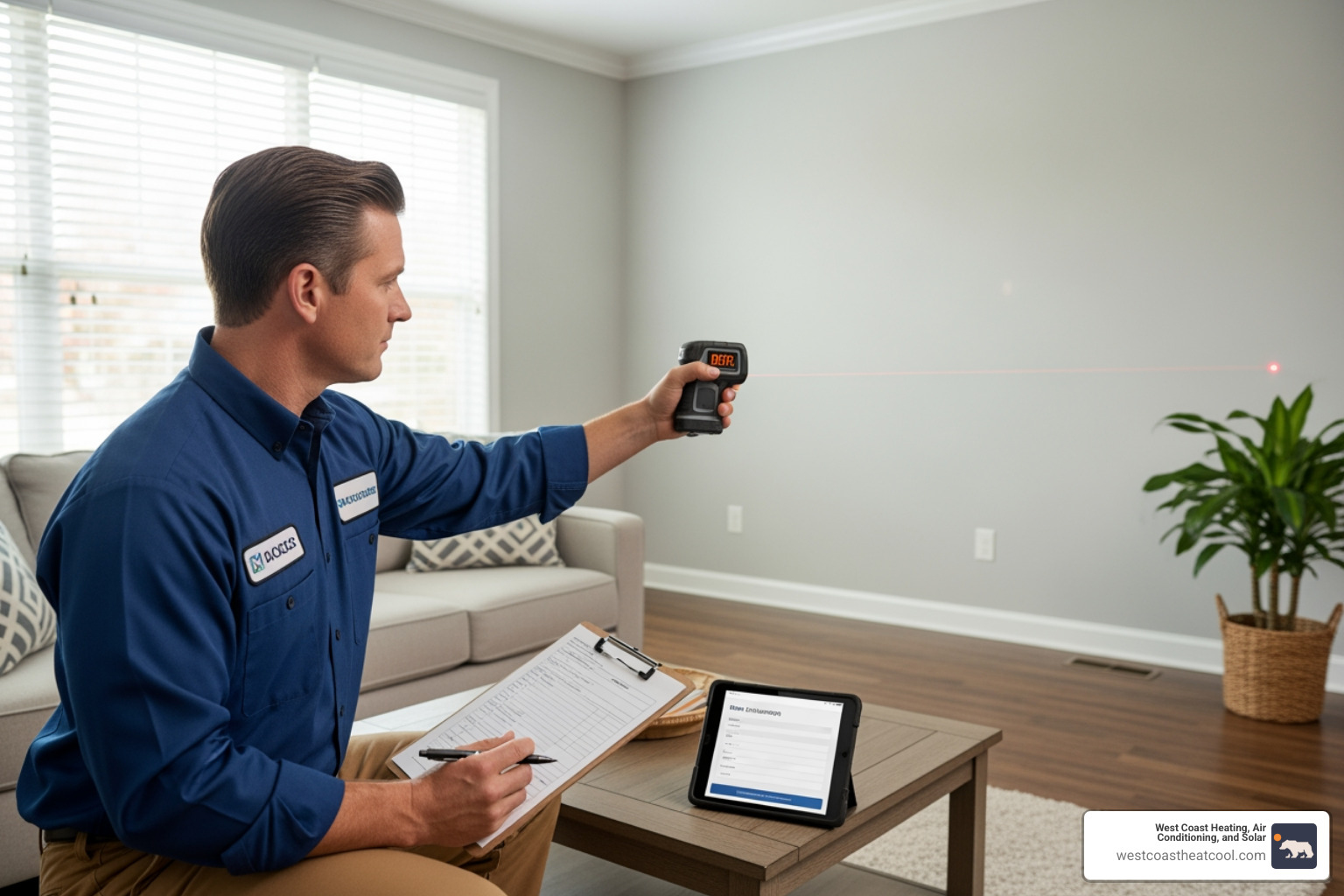
The main elements that shape your project are the system's size, its energy efficiency ratings, the type of system you choose, and the complexity of the installation, including the condition of your ductwork.
How Home Size and Layout Influence the Project
Your San Diego home's size and layout are the foundation of a proper system design. We perform a detailed Manual J load calculation to determine exactly how much heating and cooling capacity your home requires. This scientific calculation considers square footage, ceiling height, insulation quality, window types, and sun exposure. An HVAC system that's too small will run constantly and struggle to keep you comfortable, while one that's too large will cycle improperly, leading to poor humidity control and premature wear. Proper sizing is the key to optimal comfort, efficiency, and system longevity.
The Impact of Energy Efficiency Ratings (SEER & AFUE)
Energy efficiency ratings indicate how well a system performs. For air conditioners, the Seasonal Energy Efficiency Ratio (SEER) is key—a higher number means better efficiency. For furnaces, Annual Fuel Utilization Efficiency (AFUE) tells you how efficiently it converts fuel into heat. A higher AFUE rating means less wasted energy. Systems with higher efficiency ratings are designed to use less energy over their lifespan, which is beneficial for both your utility usage and the environment.
How Your Choice of HVAC System Type Affects the Project
The type of HVAC system you choose for your San Diego home significantly influences the project. Each system has distinct advantages and installation requirements.
System TypeEfficiency (General)Installation NeedsIdeal Use Cases in San DiegoCentral Air15-20+ SEERRequires existing or new ductwork; outdoor condenser and indoor air handlerWhole-home cooling for homes with existing duct systems; traditional comfort solutionHeat Pumps15-22+ SEER / 8-10 HSPFSimilar to central air; single unit provides both heating and coolingYear-round comfort in mild climates; energy-efficient heating and cooling; environmentally conscious choiceDuctless Mini-Splits18-30+ SEERNo ductwork needed; wall-mounted indoor units with outdoor compressorRoom additions; homes without ducts; zone control; high-efficiency applications; flexible installations
Central air systems are a traditional choice for whole-home comfort. Heat pumps offer an all-in-one, highly efficient solution for San Diego's mild climate. Ductless mini-splits provide best flexibility and zoned control. We can help you understand which option makes the most sense for your home's architecture and your comfort preferences.
ARTICLE SPECIFICATIONS
- Topic: hvac replacement estimate san diego ca
- Format: Extensive Guide
KEY QUESTIONS TO ANSWER (Summarized from Research)
- Average Cost: What is the average cost to replace an HVAC system in San Diego, CA? (Ranges from $4,000-$9,000 to $7,000-$15,000, with high-efficiency models pushing limits. Combined AC/furnace replacement averages $7,500 nationally, $5,000-$12,500 range. For 1,500 sq ft home, 3-ton system $8,000-$12,000.)
- Factors Influencing Cost: What factors influence the cost of HVAC replacement in San Diego? (System size/capacity, energy efficiency (SEER/AFUE), type of system, existing infrastructure (ductwork), installation complexity, brand, labor, permits, disposal, contractor chosen.)
- Price Range (Unit & Installation): What is the typical price range for a new HVAC unit and installation in San Diego? (Varies by unit type. AC installation $600-$6,000. Furnace replacement $2,620-$6,004. New HVAC system (unit + install) $7,000-$15,000. Combined AC/furnace $5,000-$11,000.)
- Home Size Impact: How does the size of the home affect HVAC replacement costs in San Diego? (Larger homes require larger capacity units, increasing cost. Costs can be estimated $3-$6 per sq ft for new HVAC system. A 1,500 sq ft home with a 3-ton system is $8,000-$12,000.)
- Energy Efficiency (SEER) Impact: What is the impact of energy efficiency ratings (SEER) on HVAC replacement costs? (Higher SEER units cost more upfront but offer significant long-term energy savings. California minimum is 15 SEER for southern states as of Jan 2023. Recommended AFUE 90%+ for furnaces.)
- System Type Impact: How does the type of HVAC system (e.g., central air, mini-split, heat pump) affect the replacement cost? (Central air, mini-splits, heat pumps have different equipment and installation complexities, leading to varied costs. Ductless mini-splits offer zoned control, central air for whole-home, heat pumps for mild climates.)
- Ductwork Costs: What are the potential costs associated with existing ductwork during an HVAC replacement? (Ductwork repair/replacement can add $2,000-$5,000. New ductwork installation $2,000-$5,000, replacement $1,400-$5,600.)
- Additional Costs: Are there additional costs to consider, such as permits, labor, and disposal fees, for HVAC replacement in San Diego? (Yes: permits $100-$250 (replacement), $250-$1,500 (new with ductwork); labor $1,000-$3,000 or $75-$150/hr; old unit removal $100-$200; HERS testing, Title 24 compliance. Asbestos removal $5-$15/sq ft.)
- Benefits of Combined Replacement: What are the benefits of replacing an HVAC system at the same time as a furnace or AC unit? (Minimizes installation costs, ensures compatibility and higher efficiency, extends new system lifespan, ensures warranty validity, consolidates labor.)
- Repair vs. Replace: When is it generally recommended to replace an HVAC system rather than repair it? (If system is >10-15 years old, repair cost >50% of new system, frequent breakdowns, rising energy bills, strange noises/odors, uneven cooling.)
- Rebates/Incentives: Are there any rebates or incentives available for HVAC replacement in San Diego? (Yes: SDG&E rebates, California TECH Clean California, federal tax credits (Inflation Reduction Act for ENERGY STAR equipment), Energy Star rebate finder, DSIRE.)
- Best Value: How can homeowners in San Diego get the best value when replacing their HVAC system? (Get multiple quotes, compare system quality, consider long-term energy savings of high-efficiency models, ensure proper sizing, hire licensed/insured contractors, check warranties, consider financing.)
- Typical Lifespan: What is the typical lifespan of an HVAC system, and when should homeowners start considering replacement? (HVAC systems 15-25 years. Furnaces 15-30 years. AC units 15-20 years. Heat pumps 10-20 years. Consider replacement at 10-15 years, especially with issues.)
- Contractor Impact: How does the contractor chosen impact the overall cost of HVAC replacement in San Diego? (Impacts labor cost, quality of installation, system sizing accuracy, handling of permits/compliance, warranty support, and overall long-term performance/satisfaction. NATE-certified, licensed, insured, experienced are key.)
- Cost Differences (Basic, Mid, High-Efficiency): What are the differences in cost between a basic, mid-tier, and high-efficiency HVAC system replacement? (Basic: $6,500–$8,500; Mid-tier: $9,000–$12,000; High-efficiency/multi-zone: $12,000–$18,000+.)
RELEVANT STATISTICS (Consolidated & Localized)
- San Diego Specific Costs:
- Average HVAC system cost in San Diego: $4,000 - $9,000 (general), $7,000 - $15,000 (new system including installation).
- For a standard 3-ton system in a 1,500 sq ft home in San Diego: $8,000 - $12,000 (includes equipment, labor, permits).
- AC Installation in San Diego: $600 - $6,000.
- Furnace replacement in San Diego (materials & labor): $2,620 - $6,004.
- Basic HVAC replacement: $6,500 – $8,500.
- Mid-tier HVAC replacement (better efficiency): $9,000 – $12,000.
- High-efficiency or multi-zone HVAC replacement: $12,000 – $18,000+.
- General/National Costs (Apply as contextual):
- Average cost to replace an HVAC system (national): $8,000 (range $5,000 - $11,000 for new furnace and AC).
- Installing a new HVAC system with ductwork: $7,000 - $16,000.
- HVAC system cost per square foot: $3 - $6 (new furnace, AC, installation).
- New HVAC system (unit only): $1,000 - $6,000.
- Combined new HVAC system (furnace + AC): $7,500 average, range $5,000 - $12,500.
- New furnace cost: $4,800 average, range $2,800 - $6,900.
- New AC unit cost: $3,900 - $8,000 average.
- Ductwork Costs:
- Ductwork repair/replacement: $2,000 - $5,000.
- Installing or replacing ductwork: $1,200 - $4,200 (another source).
- New ductwork installation: $2,000 - $5,000.
- Labor & Permits:
- Labor fees for HVAC installation: $1,500 - $3,000 (another source).
- HVAC labor rates: $75 - $150 per hour.
- Permits for HVAC replacement: $100 - $250.
- Permits for new HVAC installation with ductwork: $250 - $1,500.
- Old HVAC equipment removal: $100 - $200.
- Efficiency & Savings:
- Upgrading to high-efficiency HVAC can cut heating costs by up to 50%, cooling by 20% - 40%.
- Homeowners save $115 - $200 annually with ENERGY STAR certified systems.
- New HVAC adds 5% - 10% to home value; 70% - 90% ROI.
- Lifespan:
- HVAC systems: 15 - 25 years.
- Furnaces: 15 - 30 years.
- AC units: 15 - 20 years.
- Heat Pumps: 10 - 20 years.
- Regulations:
- California minimum SEER: 15 for southern states (as of Jan 2023).
- Recommended AFUE: 90% or higher.
- San Diego County requires HVAC permits and Title 24 compliance.
Choosing Your System: How Different HVAC Types Affect Your Project
When planning your HVAC replacement in San Diego, one of the most significant decisions is choosing the right type of system. Your selection influences the installation, your day-to-day comfort, and long-term energy use. San Diego's mild climate gives us great flexibility, with three main options to consider.
Central Air Conditioners and Furnaces
Traditional split systems, with a central air conditioner for cooling and a separate furnace for heating, are the most common setup in homes with existing ductwork. They provide consistent, whole-home comfort. Replacing both units at once creates a matched system, ensuring the components are designed to work together for optimal performance and reliability. This also streamlines the installation process. For more details, see our More info about AC installation services and More info about furnace installation services.
All-in-One Heat Pumps
Heat pumps are an increasingly popular choice for San Diego's climate. A single, highly efficient system handles both heating and cooling by transferring heat rather than generating it. This technology shines in our mild weather, delivering consistent comfort year-round while typically reducing energy consumption compared to older systems. They are an excellent choice for homeowners looking to improve their home's efficiency. We also offer specialized options like More info about electric heat pump water heater installation services.
Ductless Mini-Split Systems
If your home lacks ductwork, or if you want zoned comfort control, ductless mini-splits are a fantastic solution. These systems use an outdoor unit connected to one or more indoor air handlers, allowing you to set different temperatures in different parts of your home. This flexibility improves comfort and efficiency. Installation is also less invasive since it doesn't require cutting into walls to run ducts. Learn more about our More info about ductless mini-split installation services.
Choosing Your System: How Different HVAC Types Affect Your Project
When you're planning an hvac replacement in san diego ca, the system type you choose drives installation needs, day-to-day comfort, and efficiency. Here are the core options for San Diego homes.
Central Air Conditioners and Furnaces
Traditional split systems use ductwork to deliver whole-home comfort. A paired replacement ensures matched performance, streamlined installation, and coordinated warranties. Explore options with our AC installation services and furnace installation services.
All-in-One Heat Pumps
Heat pumps provide both heating and cooling in one efficient package—ideal for San Diego’s mild climate. Modern systems deliver consistent comfort year-round. We also offer specialized solutions like electric heat pump water heater installation services.
Ductless Mini-Split Systems
For homes without ducts or for zoned comfort, ductless mini-splits offer flexible design and room-by-room control with minimal construction. Learn more about our ductless mini-split installation services.
PILLAR PAGES TO USE FOR THE ARTICLE CTA
- https://westcoastheatcool.com/services/air-conditioning-services/ac-installation-service/
- https://westcoastheatcool.com/services/air-conditioning-services/home-ac-repair-services/
- https://westcoastheatcool.com/services/heating-services/heating-installation-service/
- https://westcoastheatcool.com/services/heating-services/heating-repair-service/
- https://westcoastheatcool.com/servi ces/heating-and-cooling-services/ductless-mini-split-installation-service/
- https://westcoastheatcool.com/services/hvac-maintenance-services/
- https://westcoastheatcool.com/services/heating-and-cooling-services/electric-heat-pump-water-heater-installation-service/
- https://westcoastheatcool.com/services/indoor-air-quality-services/
- https://westcoastheatcool.com/services/home-automation-zoning-services/
- https://westcoastheatcool.com/services/solar-services/solar-panel-installation-service/
- https://westcoastheatcool.com/resources/west-coast-club/
- https://westcoastheatcool.com/resources/specials/
- https://westcoastheatcool.com/financing/
- https://westcoastheatcool.com/shop/
- https://westcoastheatcool.com/about-us/service-area/
- https://westcoastheatcool.com/services/heating-services/furnace-installation-service/
- https://westcoastheatcool.com/services/heating-and-cooling-services/
Understanding HVAC Replacement in San Diego
When you're searching for an hvac replacement in san diego ca, you're making an important decision about comfort, efficiency, and code-compliant installation.
Quick Answer: What Influences Your HVAC Replacement Project in San Diego
- System Size: Properly sized units based on your home's square footage and layout
- Energy Efficiency: Higher SEER ratings improve performance and reduce energy use
- System Type: Central air, heat pumps, or ductless mini-splits each have different project requirements
- Ductwork Condition: The state of your existing ducts can influence the project scope
- Labor & Permits: San Diego County requirements and professional installation
- Home Specifics: Insulation quality, ceiling height, and installation complexity
For comprehensive guidance on HVAC services, explore our heating and cooling solutions, or request a detailed replacement plan from our experienced team.
A successful project blends equipment, engineering, and local compliance. With proper load calculations and ductwork checks, you can choose a system that fits your home and delivers reliable, efficient performance.
Repair or Replace? Signs It's Time for a New HVAC System
Deciding whether to repair or replace comes down to a few clear signals.
- Age matters: AC units often last 15–20 years, furnaces 15–30 years, and heat pumps 10–20 years.
- Frequent repairs point to declining reliability.
- Rising energy use suggests the system is working harder than it should.
- Strange noises or odors (grinding, squealing, musty, or burning) indicate internal issues.
- Uneven temperatures show airflow or capacity problems.
When multiple signs appear, replacement is often the more dependable path forward. Regular maintenance helps extend lifespan—see our HVAC maintenance services.
Key Factors That Shape Your HVAC Replacement Project in San Diego CA
Your hvac replacement project in san diego ca is shaped by system sizing, efficiency, system type, and installation complexity.
How Home Size and Layout Influence the Project
We perform a Manual J load calculation to determine capacity based on square footage, ceiling height, insulation, window types, and sun exposure. Correct sizing avoids short cycling, excessive runtime, and comfort issues.
The Impact of Energy Efficiency Ratings (SEER & AFUE)
For ACs, higher SEER means greater efficiency (California requires 15 SEER minimum for new installs). For furnaces, higher AFUE means more heat from the same fuel input. Choosing higher efficiency can improve comfort and reduce energy use over time.
How Your Choice of HVAC System Type Affects the Project
System TypeEfficiency (General)Installation NeedsIdeal Use Cases in San DiegoCentral AirGood to ExcellentRequires existing or new ductworkWhole-home cooling for homes with existing ducts; pairs well with furnacesHeat PumpsExcellentRequires existing or new ductworkYear-round heating and cooling in San Diego's mild climate; highly efficientDuctless Mini-SplitsExcellentNo ductwork needed; indoor and outdoor units onlyHomes without ducts, room additions, or for zoned control in different areas
We’ll help you align system type and efficiency with your home’s layout and comfort goals.
Understanding HVAC Replacement in San Diego
If you’re researching an hvac replacement in san diego ca, it helps to know the major factors that affect design and installation.
Quick Answer: What Influences Your HVAC Replacement Project in San Diego
- System Size: Properly sized units based on your home's square footage and layout
- Energy Efficiency: Higher SEER ratings improve performance and reduce energy use
- System Type: Central air, heat pumps, or ductless mini-splits each have different project requirements
- Ductwork Condition: The state of your existing ducts can influence the project scope
- Labor & Permits: San Diego County requirements and professional installation
- Home Specifics: Insulation quality, ceiling height, and installation complexity
Explore our full range of heating and cooling solutions, or request a detailed replacement plan. A thoughtful plan covers equipment, installation expertise, and local compliance for long-term comfort.
Repair or Replace? Signs It's Time for a New HVAC System
Your system may be telling you it's time to plan a replacement.
- Age: AC 15–20 years, furnaces 15–30, heat pumps 10–20.
- Frequent breakdowns: Repeated non-maintenance visits signal declining reliability.
- Higher energy use: The system is working harder to keep up.
- Noises/odors: Grinding, squealing, musty, or burning smells indicate issues.
- Uneven temperatures: Poor distribution or capacity loss.
If several apply, replacement can deliver more consistent comfort. Keep your current system running its best with HVAC maintenance services.
Key Factors That Shape Your HVAC Replacement Project in San Diego CA
Every hvac replacement project in san diego ca blends proper sizing, efficiency choices, and installation details.
How Home Size and Layout Influence the Project
A Manual J load calculation determines the right capacity using square footage, insulation, window types, ceiling height, and sun exposure—critical for comfort and system longevity.
The Impact of Energy Efficiency Ratings (SEER & AFUE)
Higher SEER (AC) and AFUE (furnace) ratings improve performance and can reduce energy consumption. California’s current standards guide baseline choices, with options available above minimums.
How Your Choice of HVAC System Type Affects the Project
System TypeEfficiency (General)Installation NeedsIdeal Use Cases in San DiegoCentral AirGood to excellentRequires existing or new ductworkWhole-home cooling; homes with existing duct systemsHeat PumpsExcellentSimilar to central air; works through ductworkMild climates like San Diego; all-in-one heating and cooling solutionDuctless Mini-SplitsExcellentNo ductwork neededHomes without ducts; room additions; zoned comfort control
Together, these choices create a custom, code-compliant solution for your home.
.svg)