

.svg)
.svg)


Why Solar Panel Cleaning Is Critical for Your San Diego Home
Solar panel cleaning is essential for maintaining peak energy production and protecting your investment. Research shows that dirty solar panels can suffer from a 7% to 25% decrease in power output, with contamination potentially reducing electricity yield by up to 30%.
Quick Solar Panel Cleaning Facts:
- Frequency: Clean 1-2 times per year (more in dusty areas)
- Best time: Early morning or late evening on cool days
- Tools needed: Soft brush, squeegee, mild soap, garden hose
- Safety first: Turn off system before cleaning
- When to call pros: Steep roofs, stubborn debris, electrical concerns
San Diego's unique environment - with coastal salt spray, desert dust, and year-round sunshine - makes regular cleaning even more important. As one solar expert noted, "If you can safely access your panels, cleaning them with a mild soap and water solution is a great opportunity to reduce soiling losses."
Studies estimate that soiling losses can negatively impact solar production by 1-4% overall. But in areas with heavy dust or pollution, the impact can be much worse. That's why understanding proper cleaning techniques isn't just about maintenance - it's about maximizing your return on investment.
The good news? Most homeowners can handle basic cleaning themselves with the right knowledge and tools. However, knowing when to call professionals can save you from costly mistakes and safety risks.
Why Clean Panels? The Surprising Impact on Efficiency and Lifespan
Think of your solar panels as windows to the sun. Just like you wouldn't expect to see clearly through a dirty windshield, your panels can't capture sunlight effectively when they're covered in grime. The impact might surprise you – solar panel cleaning isn't just about appearances; it's about protecting a significant investment in your home's future.
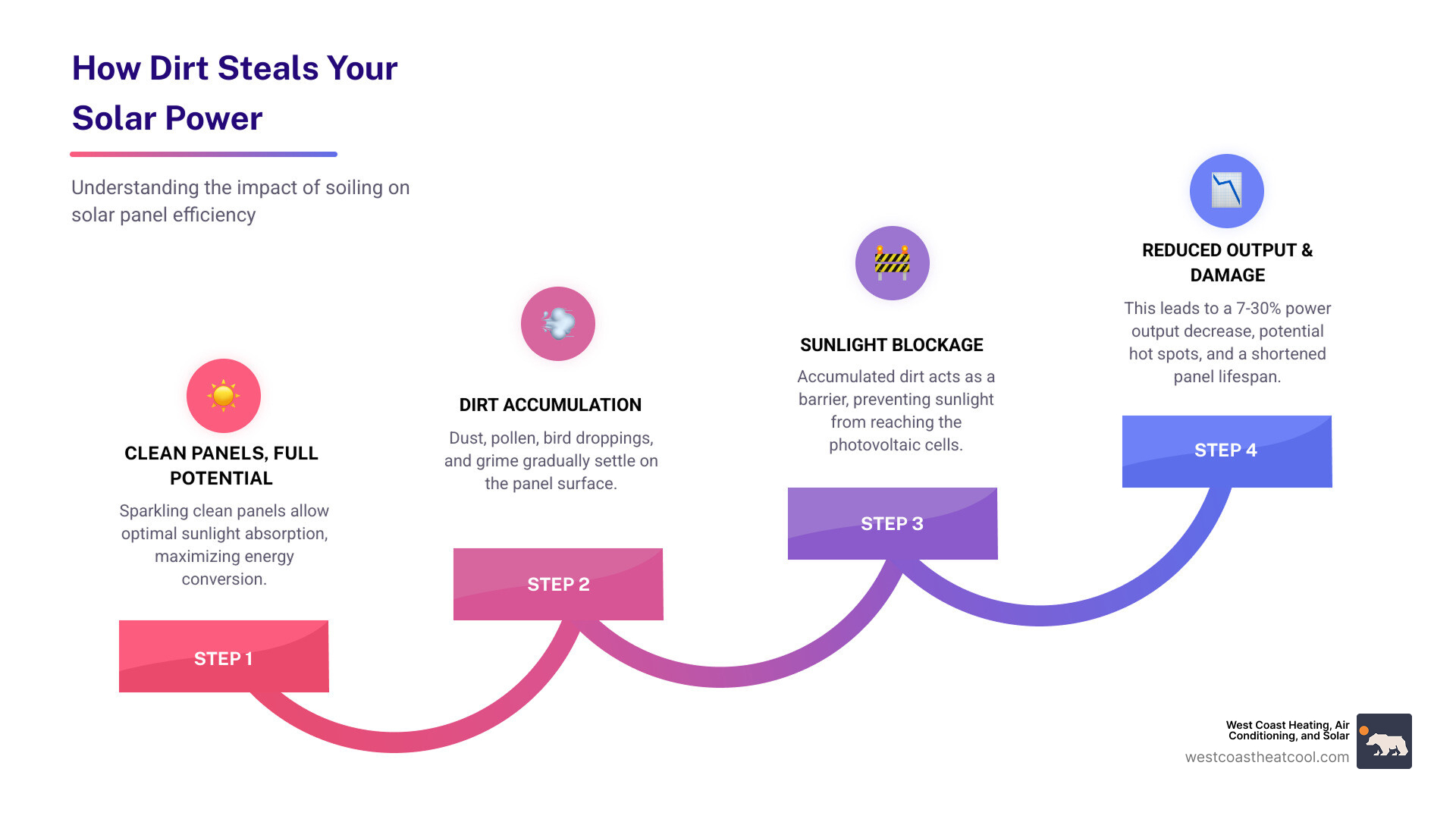
When dust, dirt, and debris accumulate on your panels, they create a barrier between the sun and your solar cells. This seemingly innocent layer of grime can reduce your system's power output by 7% to 25%, with heavily soiled panels sometimes losing up to 30% of their electricity production. That's like throwing away nearly a third of your energy savings!
This reduction in performance, known as "soiling," varies depending on your location and environment. While some areas might only see 1-4% losses overall, San Diego's unique mix of coastal salt spray, desert dust, and urban pollution can push those numbers much higher.
But here's where things get really concerning: dirty panels don't just produce less energy – they can actually damage themselves. When some areas of a panel are blocked while others receive full sunlight, you get what experts call "hot spots." These create uneven heating that can permanently damage your solar cells and shorten your system's lifespan. It's like having a fever in just one part of your panel, slowly cooking it from the inside out.
Regular cleaning protects your investment by ensuring maximum energy production year after year. For more tips on getting the most from your solar system, check out our guide on How to Get the Most Out of Your Solar Panels in Hillcrest, CA.
The Cost of Neglect
Skipping solar panel cleaning might seem like you're saving time and effort, but it's actually costing you money every month. When your panels can't produce their full capacity, you end up buying more electricity from the grid – exactly what you installed solar to avoid.
The financial impact goes beyond just reduced energy production. Neglected panels can develop problems that turn into expensive repairs down the road. Damaged panels, corroded connections, and system failures that could have been prevented with regular maintenance suddenly become your responsibility.
Here's something many homeowners don't realize: some manufacturers may void your warranty if they determine that lack of maintenance contributed to system problems. That means costly repairs or replacements that should have been covered suddenly come out of your pocket.
The bottom line? Dirty panels equal a lower return on your solar investment. To catch potential issues before they become expensive problems, consider scheduling professional Solar Panel Inspection Services in San Diego, CA.
Common Culprits: What's Making Your Panels Dirty?
Your solar panels face a daily assault from Mother Nature and our feathered friends. Understanding what's making them dirty helps you plan the right cleaning approach for your specific situation.
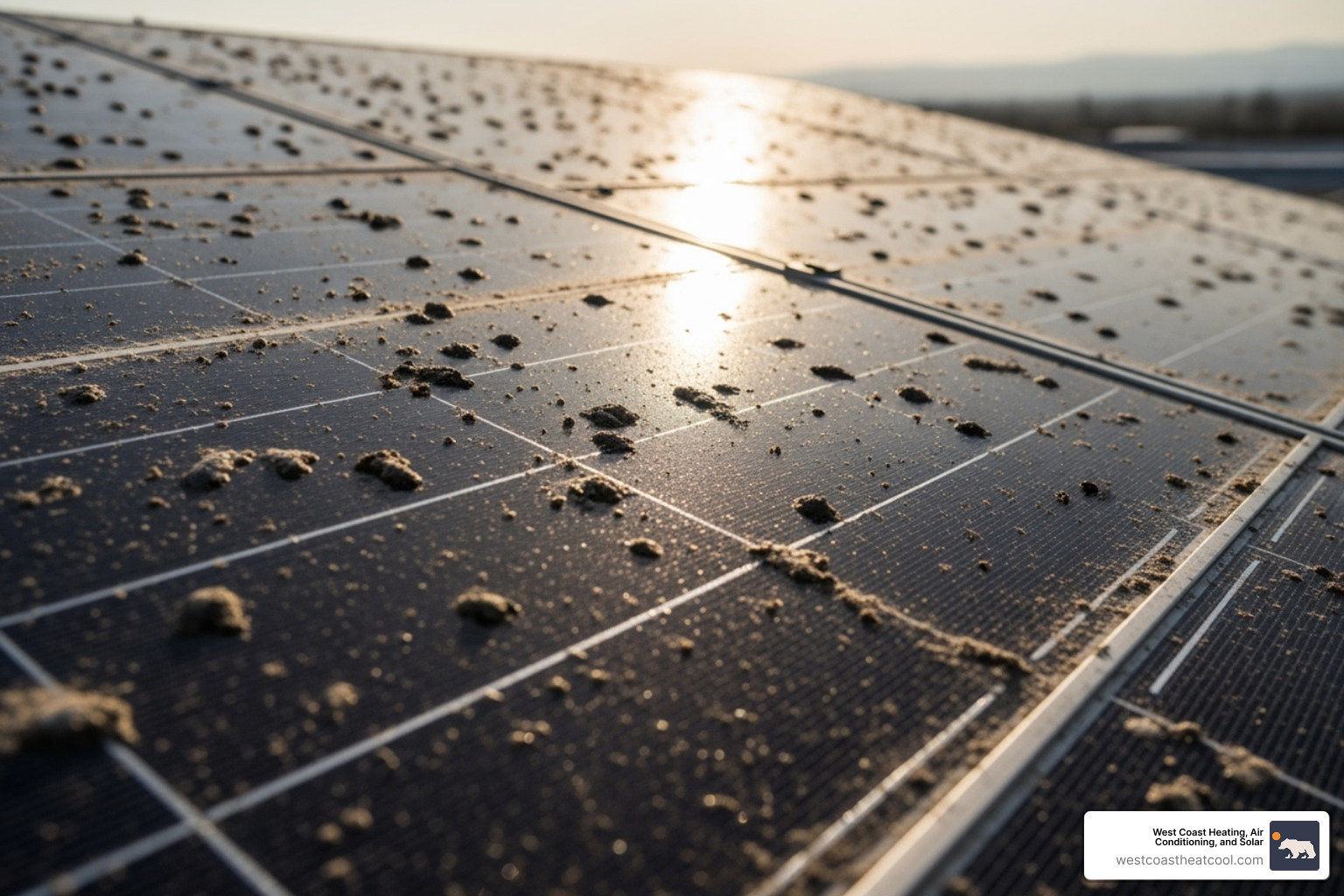
Dust and pollen are the most common troublemakers, especially during San Diego's dry seasons and spring blooms. These fine particles seem harmless but create an opaque film that blocks precious sunlight from reaching your solar cells.
Bird droppings might look small, but they're surprisingly effective at blocking sunlight. These sticky deposits act like tiny umbrellas on your panels, creating concentrated shading that can trigger those damaging hot spots we mentioned earlier.
Tree sap presents a particular challenge for panels installed near trees. This sticky substance doesn't just block light – it acts like glue, trapping other debris and creating stubborn buildup that's difficult to remove with just water.
If you live near the coast, coastal salt spray carries microscopic salt particles that settle on your panels. Over time, this creates a hazy film that reduces your panels' ability to capture sunlight and can cause long-term corrosion if not addressed.
Perhaps most concerning is lichen and moss growth. These organisms love to establish themselves in the gaps between your panel's glass and frame, especially in areas where moisture and debris accumulate. Once they take hold, they create significant shading and can cause permanent damage. Their root-like structures make them incredibly difficult to remove without professional help.
The Ultimate DIY Solar Panel Cleaning Guide
For many homeowners, tackling solar panel cleaning themselves can be a rewarding and cost-effective task. There's something satisfying about seeing those panels sparkle again while knowing you're protecting your investment. However, safety and proper technique aren't just recommendations - they're absolutely essential.
Before we even think about touching a panel, we must prioritize safety above everything else. The first and most crucial step is always to turn off your solar system completely. This eliminates any electrical hazards while you're working and gives you peace of mind. Once the system is safely de-energized, we can proceed with gentle cleaning methods that protect your valuable panels from damage.
Think of your solar panels like expensive windows - they need care and the right approach. For comprehensive solar maintenance, including professional cleaning when you need it, our team offers expert services in Solar Panel Maintenance in San Diego, CA.
Essential Tools and Solutions for Solar Panel Cleaning
Gathering the right tools before you start will make the job much easier, safer, and more effective. You don't need fancy equipment - just the right basics.
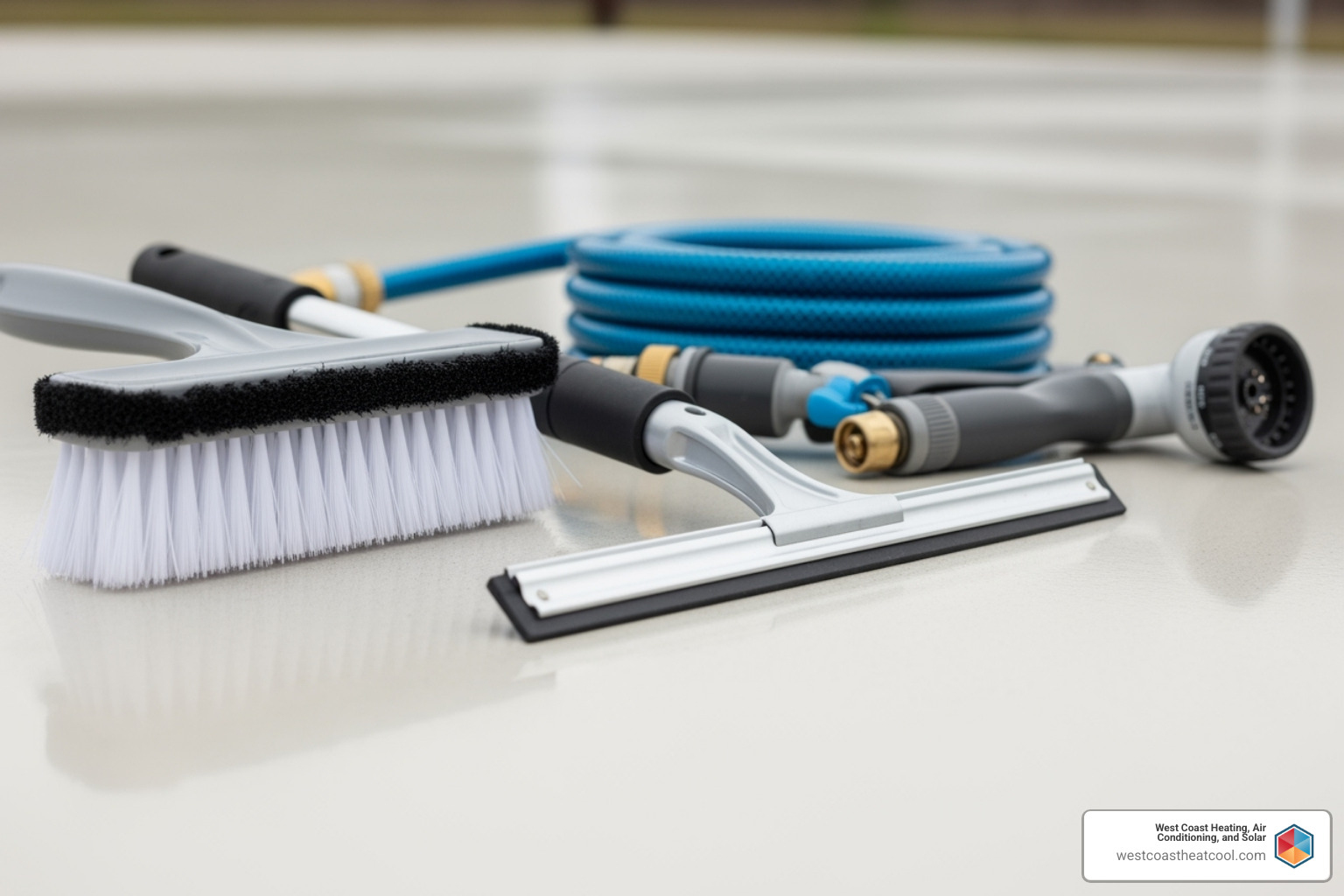
Here's what we recommend for effective solar panel cleaning:
A soft-bristled brush is your primary cleaning tool. Choose one with soft nylon bristles to avoid scratching the panel's glass surface. An extendable pole attachment is ideal for reaching panels safely from the ground or a stable platform.
Your squeegee with extension pole will be your best friend for removing excess water and preventing those annoying water spots, especially if you're using tap water. Look for a good quality squeegee that won't leave streaks.
For soap, stick with mild, pH-neutral options - think gentle dish soap. Something that won't leave residue or harm the panel's protective coating. Avoid harsh chemicals, abrasive cleaners, or anything with strong detergents. A simple water and dish soap solution works wonders.
Deionized water isn't strictly necessary for every cleaning, but it's the gold standard for a spotless, streak-free finish. Since it contains no minerals, it won't leave deposits. If you live in an area with hard water, this upgrade is definitely worth considering.
Finally, a standard garden hose with spray nozzle provides the gentle rinse your panels need. Avoid high-pressure washers at all costs - they can damage the panels or their seals.
Step-by-Step Cleaning Instructions
Once you have your tools ready and your system is safely turned off, it's time to get those panels sparkling again.
Choose the right time for cleaning - early morning or late afternoon when panels are cool. This prevents thermal shock (cracking from sudden temperature changes) and allows water to dry slower, reducing streaks.
Start by pre-rinsing the panels thoroughly with your garden hose. This step washes away loose dirt, dust, and debris, preventing scratching during the scrubbing phase. Don't skip this - it's like washing your car.
Next, prepare your soapy water in a bucket using clean, preferably lukewarm water and a small amount of mild, pH-neutral soap. You don't need much soap - a little goes a long way.
Now for the gentle scrubbing. Using your soft-bristled brush (attached to an extension pole if needed), gently scrub the surface of each panel. Work in sections, applying gentle pressure to lift grime. For stubborn spots like bird droppings or tree sap, let the soapy water sit for a minute or two to loosen the material before scrubbing.
Give everything a thorough final rinse with clean water from your garden hose. Make sure all soap residue is completely washed away - any remaining soap can attract more dirt or leave streaks.
For the finishing touch, either air dry or squeegee the panels. For best results, especially if you're not using deionized water, use your squeegee to remove excess water. Work from top to bottom with overlapping strokes to avoid streaks. Otherwise, simply let the panels air dry naturally.
Following these steps will help ensure your panels are clean and performing at their best, contributing to all the benefits solar brings to your home. Learn more about these advantages in our blog: Benefits of Solar Paneling for Your Home in El Cajon, CA.
Critical Do's and Don'ts
To protect your investment and ensure your safety, understanding what to do - and more importantly, what not to do - when cleaning solar panels can save you from costly mistakes.
DO use soft brushes and cloths - treat your panels like the delicate, expensive equipment they are. DO use pure water when possible - manufacturers recommend deionized water to avoid mineral deposits, and if you're using tap water, that squeegee becomes essential. DO clean on cool days - early morning or late afternoon prevents thermal shock and reduces streaking. DO inspect for damage first - look for cracks, loose wiring, or other issues before you start, and call a professional if you spot anything concerning. DO prioritize safety - if you're working at heights, use proper safety equipment like harnesses and secure ladders.
On the flip side, DON'T use pressure washers - they can damage panels or their seals with excessive force. DON'T use harsh chemicals - stick to mild, pH-neutral soaps that won't harm protective coatings. DON'T clean on hot days - this can cause thermal shock and rapid drying that leaves water spots. DON'T walk on panels - you can crack them or damage the internal wiring. DON'T ignore electrical safety - always turn off your system before cleaning.
When in doubt, it's better to call the professionals than risk damaging your expensive solar investment.
.svg)