What should I do if I smell gas or my carbon monoxide alarm goes off?
Leave first, call second. If you smell gas, don’t flip light switches or use the thermostat. Get everyone out, then call 911 or your gas company from outside. If your CO alarm goes off, or anyone has headaches, dizziness or nausea that ease outdoors, get everyone into fresh air and call 911. Once it’s safe, call us to inspect the furnace before you use it again. Put a CO alarm on every level of your home and outside the bedrooms.
How long do furnaces last?
Gas furnaces often last 15 to 20 years. Heat pumps usually last 10 to 15, because they heat in winter and cool in summer. A yearly tune-up helps either reach the high end of its range.
How much does a new furnace cost?
Replacing a gas furnace on its own typically costs $3,800–$12,000, depending on efficiency and size. A furnace and a new cooling system together typically run $7,000–$18,725. Financing is available on approved credit.
Should I repair or replace my furnace?
Multiply your system’s age by the repair cost. Under $5,000, repair usually makes sense. Over $5,000, consider replacing. A cracked heat exchanger usually means replacing the furnace whatever its age. Your technician will also look at the system’s condition, repair history, efficiency and warranty before recommending either.
How often should I change my furnace filter?
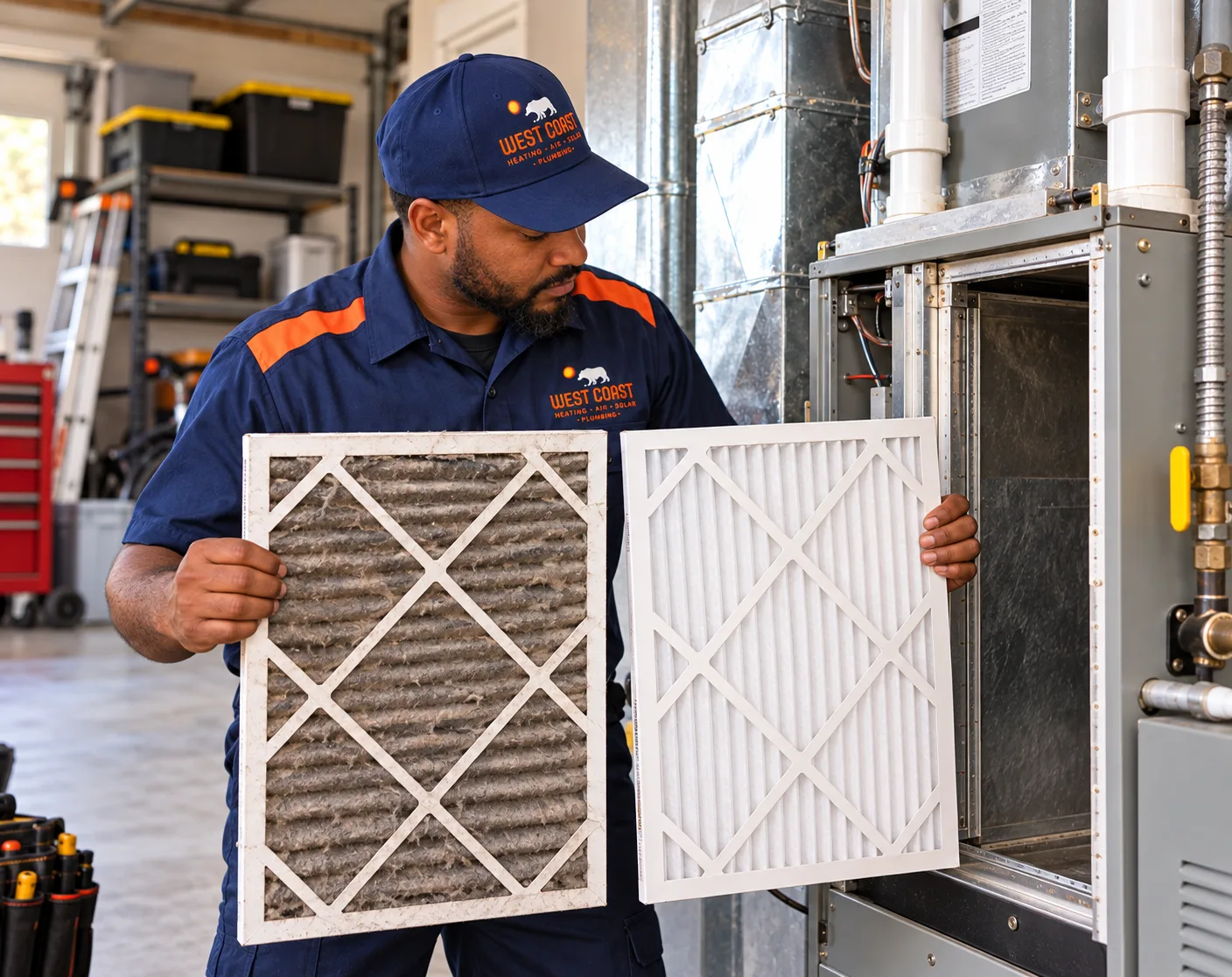
Check it monthly during heating season and change it at least every 3 months, more often with pets or allergies. A clogged filter can make a furnace overheat and shut itself off.
Why does my heat smell like burning when I first turn it on?
It’s usually dust that settled on the furnace over the summer burning off, and it should fade quickly. If it smells electrical or lasts more than an hour, turn the system off and call us. If you smell gas, leave the house first and call 911 or your gas company from outside.
Heat pump or furnace: which is better?
It depends on your home and your fuel. Heat pumps heat and cool with electricity and use about half the electricity of electric resistance heat. Gas furnaces put out hotter air and handle cold nights easily. A dual-fuel system uses both. Your technician can walk you through the options for your home.
How often should my heating system be serviced?
Once a year, ideally in the fall, before the first cold nights. A tune-up keeps the system efficient, checks the heat exchanger and catches small problems early. West Coast Club members get it included.
What temperature should I set my heat to in winter?
The Department of Energy suggests about 68–70°F when you’re home and awake. Setting it back 7–10 degrees for 8 hours a day can save up to 10% a year. With a heat pump, use smaller setbacks so backup heat doesn’t kick in every morning.
Why is one room colder than the rest of the house?
Uneven heating tells us where the problem shows up, not what’s causing it. It can come from airflow, ductwork, the room’s exposure or the controls, and it doesn’t automatically mean the furnace has failed. When you call, tell us which rooms are affected and whether the problem is new or has always been there.