Are you licensed and insured?
Yes. Our plumbers are licensed and insured for homes and businesses, and they keep training on new products and methods. CSLB License #810930.
What causes clogged drains?
Soap scum, grease and food oils, hair, wipes (even ones labeled flushable), paper towels, feminine hygiene products, cotton balls, minerals, toothpaste and makeup residue, foreign objects and tree roots. Grease is the big one in kitchens: it coats the pipe, and everything else sticks to it.
Can I use a chemical drain cleaner?
We don’t recommend it. Never mix drain chemicals, because they can release toxic gas, and don’t pour them into a fully blocked line, where they just sit in the pipe. A plunger with the cup fully under water is a safer first try. If that doesn’t clear it, call us.
How do I know if I have a hidden leak?
Watch for a water bill that jumps without a change in use, damp spots on carpet, ceilings or the lawn, a musty smell, spongy floors or new cracks in the foundation. With every fixture off, a water meter that keeps moving means water is going somewhere. For toilets, a few drops of food coloring in the tank will show up in the bowl if the flapper leaks.
Why is my water pressure low?
If it’s one faucet or shower, mineral buildup in the aerator or cartridge is the usual cause. If it’s the whole house, it can be corroded galvanized pipe, a hidden leak or a valve that isn’t fully open. Tell us which fixtures are affected when you call.
What is a sewer camera inspection?
We feed a small fiber-optic camera into the drain to see inside your drain and sewer lines. It finds cracks, roots and buildup the eye can’t, without digging up the yard. We show you what we found and talk through the most cost-effective repair or replacement.
Do you install high-efficiency toilets?
Yes. Many toilets made before 1992 use 5 to 7 gallons per flush, which can add up to 9,000 to 13,000 gallons a year. High-efficiency toilets use far less water. We also install comfort-height toilets, which sit 17 to 19 inches high and are easier to use for anyone with limited mobility.
How long does a water heater replacement take?
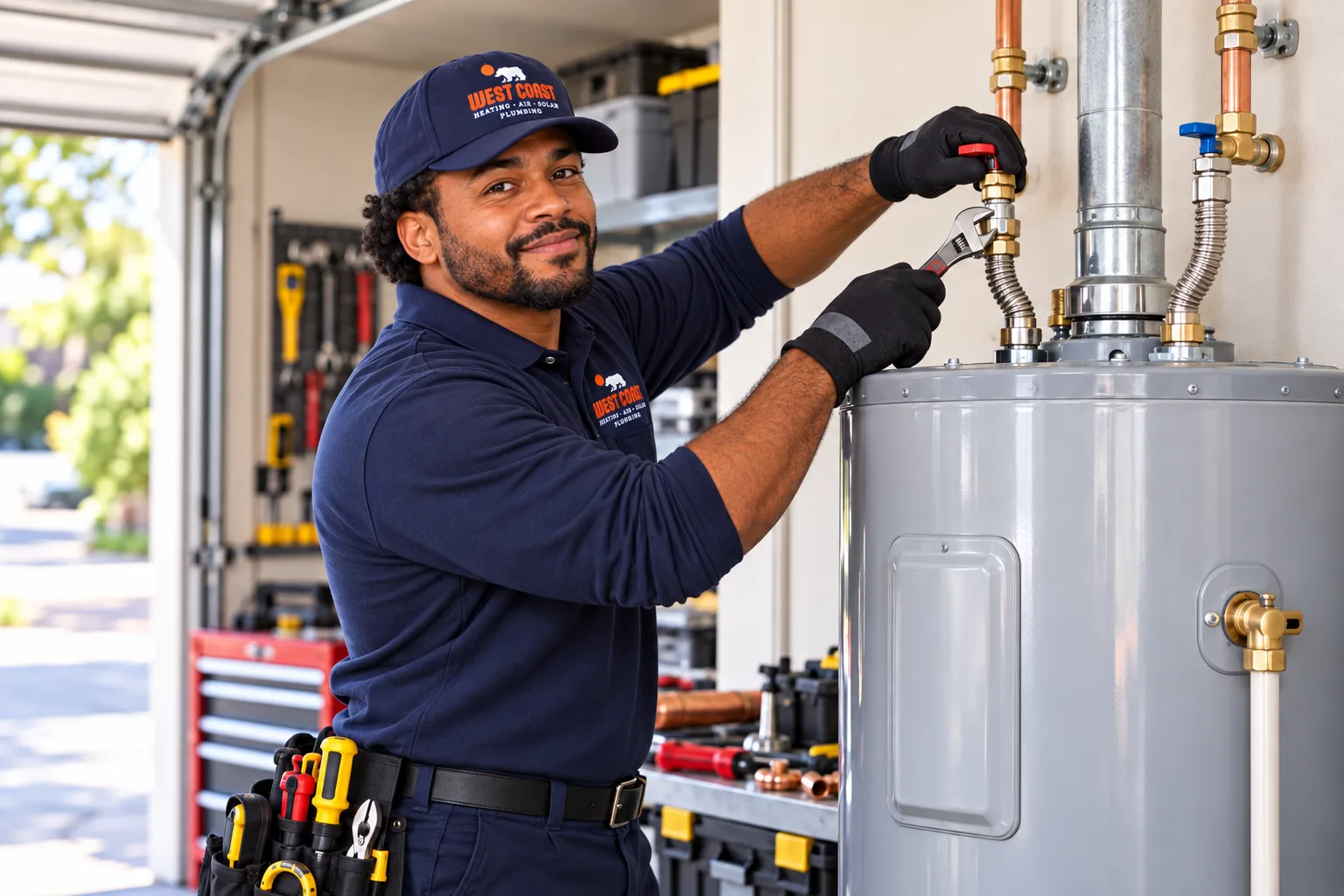
A typical tank replacement takes two to three hours. We disconnect and drain the old tank, remove it, install the new one, then fill and test it before we leave. For sizing and tank versus tankless, see our
water heater page.
How often should my plumbing be inspected?
Once a year. An inspection checks fixtures, seals, supply lines, drains and the water heater, and nearly every problem it finds is cheaper to fix early. West Coast Club members get a plumbing visit every year.
How can I prevent plumbing problems?
Check for leaks regularly, and know where your main shutoff and each fixture’s shutoff are. Keep grease out of every drain, flush nothing but toilet paper, and put strainers in sinks and tubs to catch hair and food. If a problem keeps coming back, leave the fixture alone and call us.